
Periodontal treatment
Periodontal treatment helps control diseases of the gums and other periodontal tissues, slow their progression, and preserve teeth. If you notice bleeding gums, receding gums, or loose teeth, it’s important to see a specialist and begin a personalized treatment plan.

Periodontology is a branch of dentistry dedicated to the diagnosis and treatment of diseases of the periodontal tissues and surrounding structures.
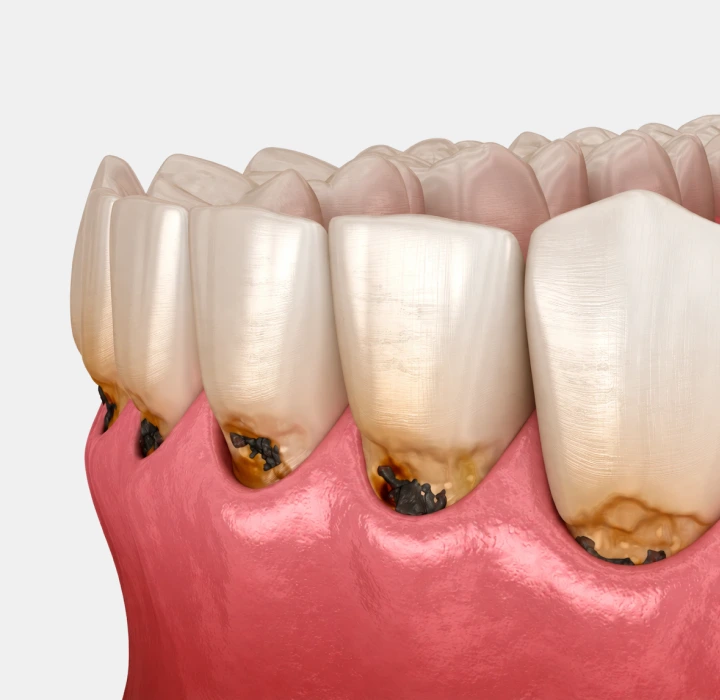
Periodontal diseases usually develop gradually. The initial stage may go unnoticed, but if left untreated, the inflammation can eventually damage the tissues surrounding the teeth. This leads to bleeding gums, receding gums, and loose teeth. Untreated periodontal disease eventually results in tooth loss.
At the “Diadenta” clinic, periodontal health is assessed comprehensively. The goal is not only to treat the existing problem but also to identify its underlying causes and help the patient maintain healthy gums.
Causes and risk factors of periodontal disease
The most common causes of periodontal disease:
- genetic predisposition;
- bacterial plaque;
Risk factors:
- smoking;
- stress;
- hormonal changes;
- certain systemic diseases and conditions that weaken the immune system.
Genetic predisposition does not, in and of itself, cause bone loss around the tooth. It increases the likelihood of developing periodontal disease. The main factor that triggers the development of the disease is bacterial plaque, which accumulates on the teeth and is part of both soft and mineralized deposits (dental calculus).
Specialists providing this service

Frequently asked questions
No. Healthy gums usually do not bleed. Bleeding can be one of the first signs of gum inflammation, so it should be assessed.
Yes. Untreated periodontitis damages the tissues that support the teeth, so over time the teeth may be lost.
In most cases, no, because a “cure” would mean returning the tissues to the condition they were in before. The main goal of treatment is to control the disease and to stop or minimise inflammation and its progression. To maintain the result in the long term, ongoing specialist care and regular professional oral hygiene are very important. The frequency of check-ups and professional hygiene is determined individually.
Bad breath may be related to bacterial plaque, gum inflammation, pus from the gum pockets or other oral health problems. The cause can be identified during a consultation.
The frequency of visits depends on the individual situation, the activity of the disease and the results of treatment.
If you catch a cold or another acute infectious disease, or if a cold sore appears, please let the clinic’s reception know. We will offer you another convenient appointment time. This helps us reduce the risk of spreading infections and protect our patients, those accompanying them, and our staff.

Start your
journey towards a healthy
smile
Book a consultation. We will assess your situation, discuss treatment options and help you choose the most suitable course of action.