
Dental fillings
Treatment of teeth affected by tooth decay and replacement of old, substandard fillings to restore the tooth's shape, function, and integrity.

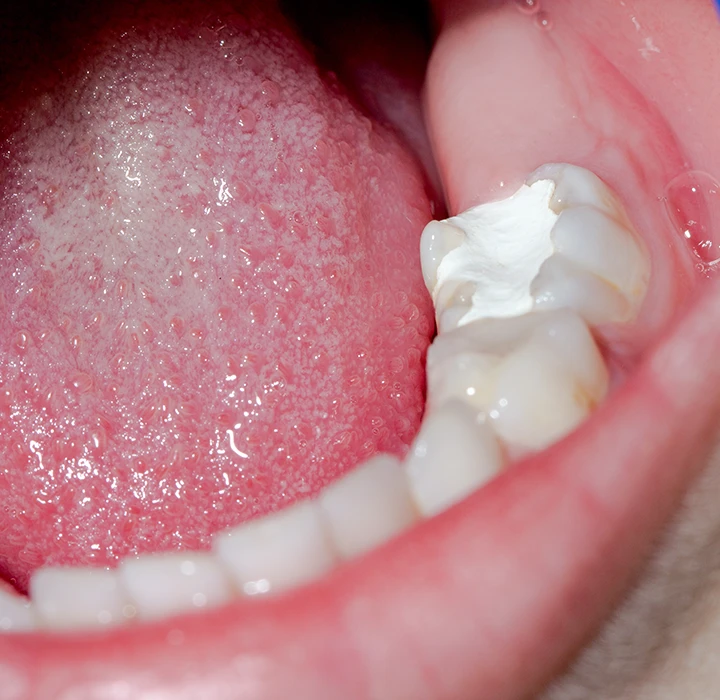
A dental filling is a therapeutic procedure in which tooth tissue damaged by decay is removed, the prepared cavity is filled with a filling material, and the tooth’s shape and function are restored. Fillings may also be necessary when replacing old fillings that are worn out, leaky, cracked, or have other defects.
With timely treatment of tooth decay, the spread of the damage can be stopped, and as much of the natural tooth structure as possible can be preserved. If left untreated, tooth decay can progress into deeper layers of the tooth, causing sensitivity, pain, or inflammation of the dental pulp. In such cases, a filling alone may no longer be sufficient.
At the Diadenta clinic, the condition of each tooth is assessed on an individual basis. Before treatment, the dentist explains the identified problem, discusses possible treatment options, and provides recommendations to help reduce the risk of recurrent tooth decay.
When should old fillings be replaced?
The age of a filling alone is not a sufficient reason to replace it. The dentist evaluates the marginal seal of the filling, wear, cracks, the condition of the tooth, and any signs of decay.
It may be recommended to replace an old filling when:
- the filling is cracked, chipped, or has fallen out;
- a gap has formed between the filling and the tooth;
- decay is detected or suspected under the filling;
- the filling interferes with the bite;
- the tooth tissue adjacent to the filling is damaged;
- the surface of the filling has become rough and is difficult to clean;
- sensitivity or pain associated with the filled tooth has developed.
If the filling has only a small, localized defect, in some cases it can be repaired rather than completely replaced. This preserves more healthy tooth structure. The decision is made after a clinical examination and, when necessary, an X-ray.
Specialists providing this service

Frequently asked questions
Not always. Early lesions that have not yet formed a cavity can, in certain cases, be monitored and treated with preventive measures. When the tooth surface has broken down and a cavity has formed, restorative treatment is usually needed. The decision depends on the activity and depth of the lesion and the patient’s risk of decay.
No. A filling should not be replaced just because of its age or a slight change in colour. It is replaced or adjusted when a leak, crack, secondary decay, functional problem or another clinically significant issue is found.
Short-term sensitivity may occur after treatment of a deeper lesion, due to irritation of the tooth tissues or while the tooth adapts to the new restoration. It usually decreases gradually. If the sensitivity gets worse or spontaneous or night-time pain appears, the dentist should examine the tooth again.
A light-cured composite is hardened during the procedure itself. However, it is better not to eat while the anaesthetic is still working, so that you do not bite your soft oral tissues. If the dentist used a different filling material or gave individual recommendations, follow their instructions.
If the filled tooth is the first one you feel when you bite and this does not go away within a few days, it hurts when chewing, or your bite feels different, contact the clinic. The dentist will check the contacts and, if necessary, adjust the surface of the filling.

Start your
journey towards a healthy
smile
Book a consultation. We will assess your situation, discuss treatment options and help you choose the most suitable course of action.